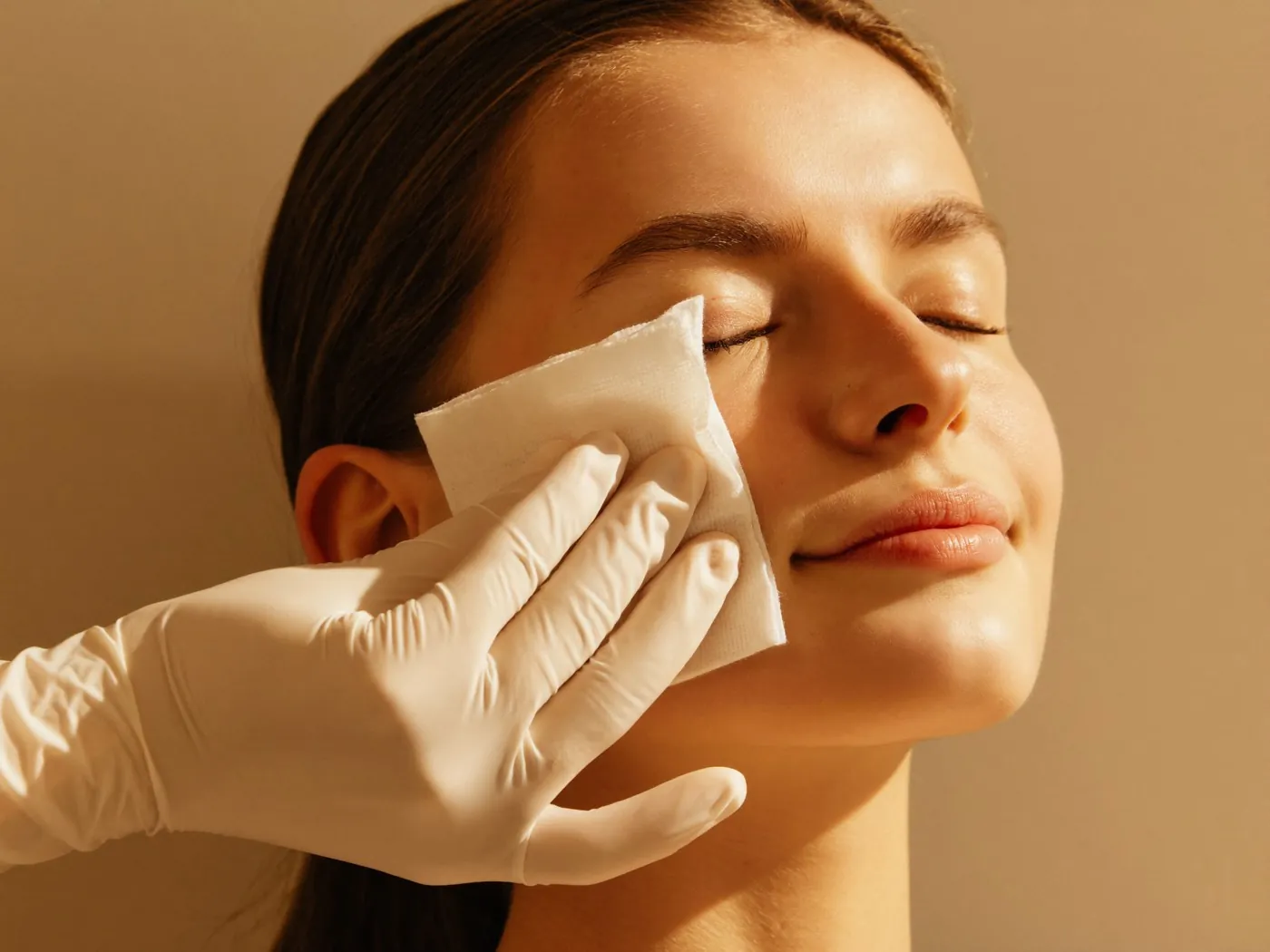
A chemical peel is a professional skin treatment where a chemical solution is applied to the skin to remove its outermost layers, encouraging smoother, more even-toned skin to grow in its place. It's one of the older, more established treatments in aesthetic medicine — and also one of the most misunderstood, since "chemical peel" covers a wide range of strengths and formulas, not just one standard treatment.
What Is a Chemical Peel?
At its core, a chemical peel works by controlled exfoliation. The solution is applied to the skin, left on for a specific amount of time, and then either neutralized or allowed to work its way through the skin's outer layers. As the treated skin cells shed, fresher, more evenly textured skin is revealed underneath.
Peels vary significantly in depth and strength — from light peels that cause minimal visible peeling to medium-depth peels, like the VI Peel, that produce more noticeable results over about a week of recovery. What "chemical peel" actually means for your skin depends entirely on which peel is right for your goals.
What Do Chemical Peels Do for Your Skin?
Chemical peels are commonly used to address:
- Uneven skin tone and sun-related discoloration
- Post-acne marks and textural irregularities
- Fine lines and early signs of aging
- Enlarged pores
- Overall dullness and rough texture
Because peels work by prompting your skin to shed and regenerate, results build over the days following treatment rather than appearing instantly — which is different from a treatment like a HydraFacial, where results are visible immediately with no downtime.
How Does a Chemical Peel Work?
The process itself is straightforward:
- Skin assessment. Your provider reviews your skin history, tone, and goals to determine the right peel strength and formula for you.
- Preparation. Some peels benefit from skin priming beforehand with specific skincare products to improve results and reduce irritation.
- Application. The peel solution is applied for a monitored period — you'll typically feel warmth or mild tingling.
- Recovery. Light flaking usually begins around day three and resolves within about a week, revealing fresher skin underneath.
What Should You Expect During Recovery?
This is where chemical peels differ most from gentler treatments: there's a visible peeling phase. Depending on the depth of your peel, you can expect mild to moderate flaking for several days, some temporary redness, and a period where your skin is more sun-sensitive than usual. A medium-depth peel like the VI Peel typically means visible peeling starting around day three, resolving within the week.
This is a normal, expected part of how the treatment works — not a sign anything has gone wrong.
How Many Chemical Peel Sessions Do You Need?
Skin renews in cycles, so a single peel is rarely the full picture for deeper concerns. A series of two to four peels, spaced about a month apart, is common when the goal is more significant improvement in tone, texture, or pigmentation. Your provider will map out the right series for your specific goals at consultation, since the right number of sessions depends entirely on what you're treating.
Chemical Peels vs. Other Resurfacing Options
Chemical peels aren't the only way to improve skin texture and tone. RF microneedling works differently — using controlled micro-injuries and radiofrequency energy rather than a chemical solution — and is often a better fit for concerns like deeper texture irregularities or skin laxity. Many patients combine peels with microneedling or a HydraFacial as part of a broader skin health plan, since each treatment addresses the skin a little differently.
Ready to Find the Right Peel for Your Skin?
If you're in Columbia or Timonium, Maryland, and want to know which chemical peel actually fits your skin's needs, book my chemical peel consultation and get a plan built around your goals, not a generic recommendation.